
Or good games?
As a homeschooling mom it is tempting to try to make everything “educational”. A walk turns into a nature walk, cooking dinner becomes a chemistry lesson, folding laundry becomes a geometry lesson (folding, right?). As a gameschooling mom, I’m often asked what my favorite educational games are, and although there is an entire subset genre of games, and in fact entire companies, that focus on games that teach specific skills or bodies of knowledge, I argue that all good games are educational games.
One of my favorite early learning games is Sum Swamp. It’s super cute, well thought out, and has mechanics that keep the gameplay interesting and unique from one play to the next. This is what we would call an educational game. It has the specific purpose of teaching addition and subtraction, odds and evens. There is no strategy, there is no option of creativity, the game lives within the confines of the rules. You roll, you add or subtract, you move, you get to the end and either win or lose. Once a child has mastered those skills, they have outgrown the purpose of the game. They might still enjoy playing it every now and then, but there is not an option for improving their skill or strategy. It’s a closed opportunity.
Contrast that with the game Mario Gamer Monopoly. In this game you are not only rolling and counting spaces, you might have to move forward or backward; you might have to pick up coins or drop coins; you might have a special power that gives you decisions to make, and you might be fighting a boss that requires you to add dice rolls together. Would this game be advertised as educational in one of those cute booths at the homeschooling convention? Probably not. But I’d argue that there is a lot more math and logic being exercised in every single turn than in Sum Swamp. There is also value because of replay-ability. Unlike Sum Swamp and like-games, you don’t outgrow a game like Mario Gamer Monopoly because you’ve mastered the skills to the point where there is nothing left to learn. Every time you play the game there are different random elements that give you new gameplay, which means that you would have to adapt your choices based on the elements and the players playing.
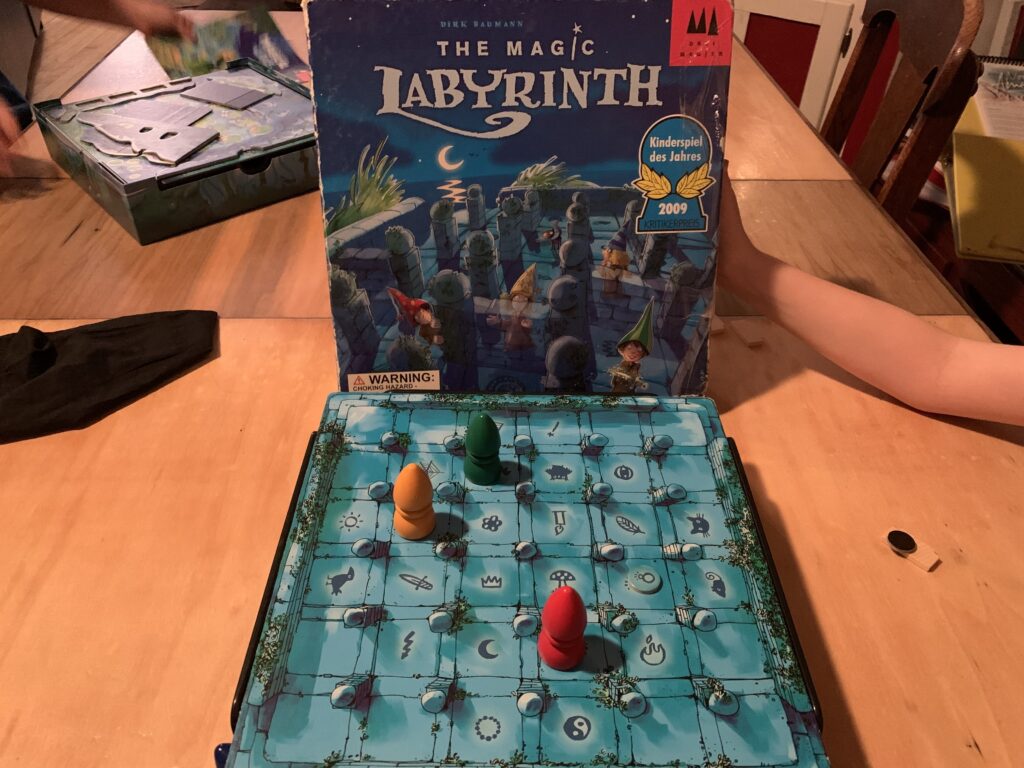
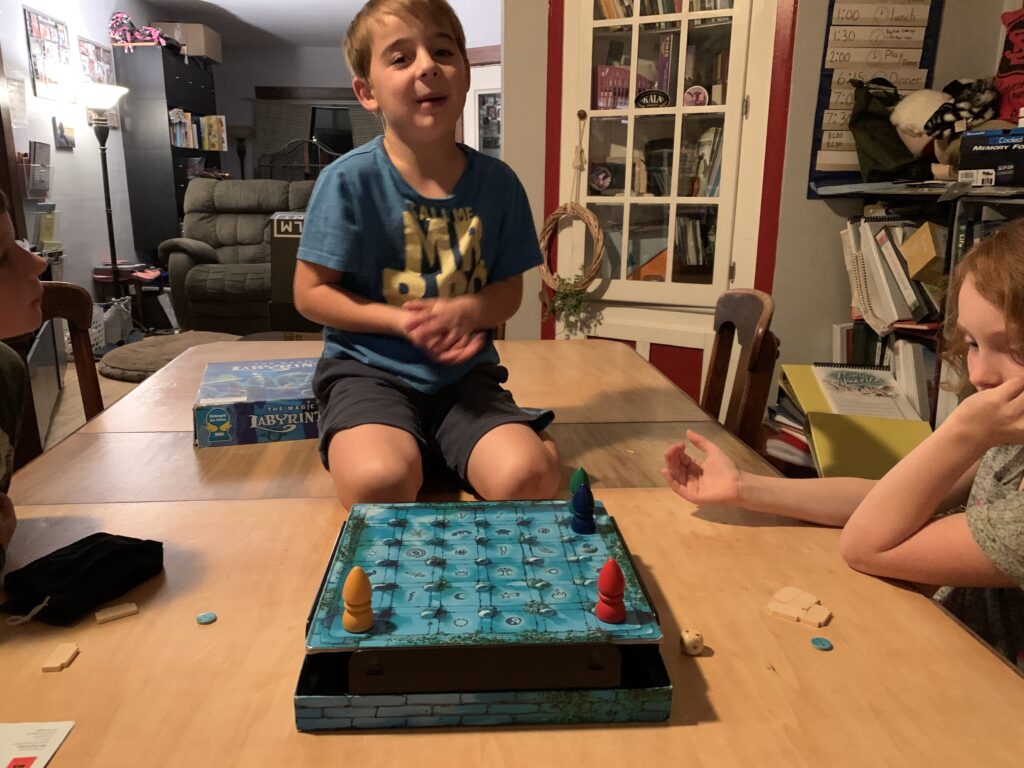
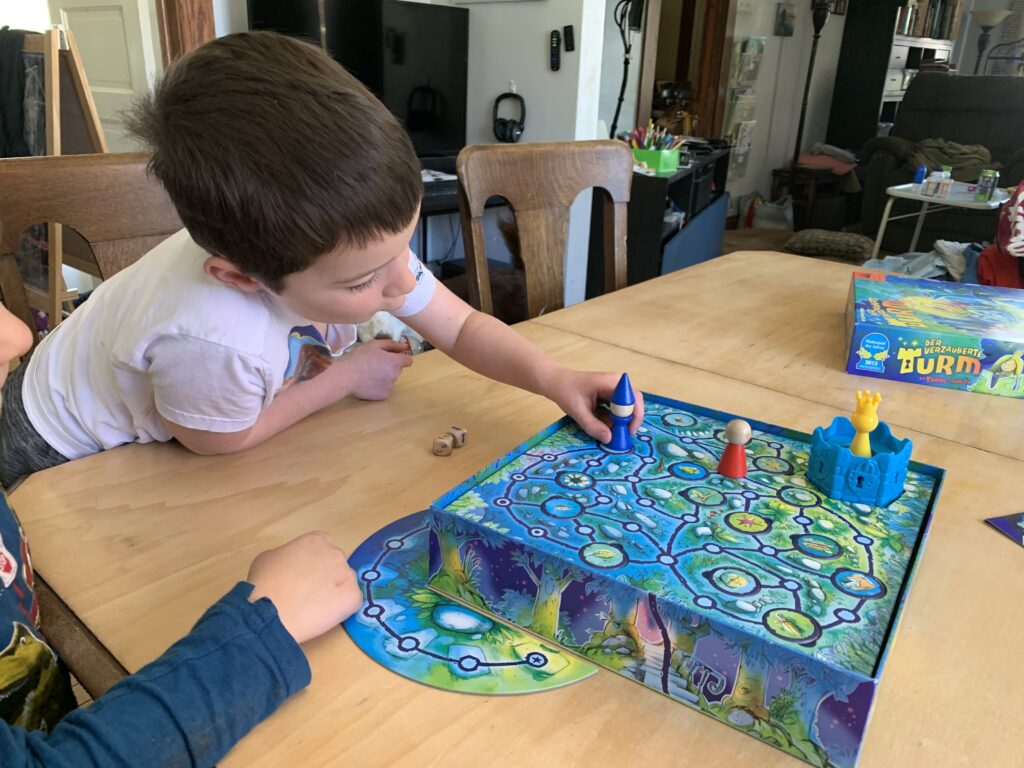
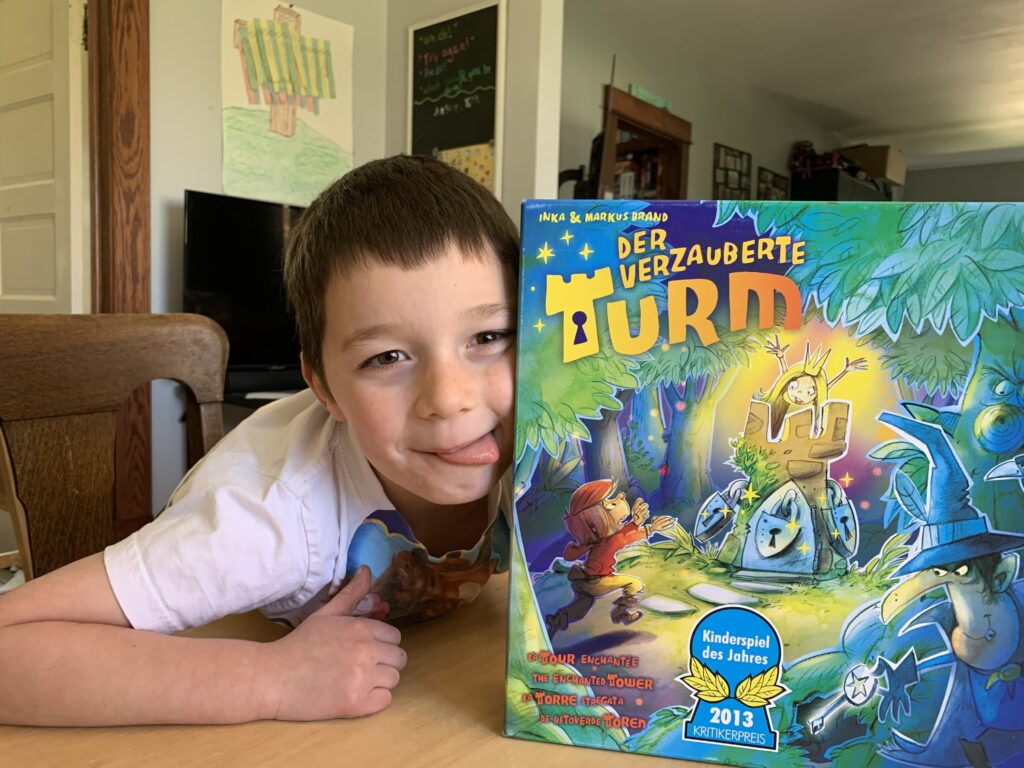
Now there is a time and place to teach a child to play Candy Land or Chutes n Ladders. It teaches the basics of what a game is, basic mechanics, and how to take turns, but I encourage you to quickly think beyond those games to options like Magic Labyrinth, or Flutterstone Castle (basically any Drei Magier game). You’re going to get so much more bang for your buck navigating invisible mazes or launching bats through castle windows than you would getting continually aggravated moving two steps and sliding down to the bottom of the board, over and over again.
Once your child is comfortable following rules and coming up with basic strategies, the sky is the limit when it comes to game play. Want to improve reading skills or spelling? Play a game like Word on the Street, or for the more adventurous, Illiterati. Do you want to improve math skills such as multiplying and dividing? Play any good engine builder such as Creature Caravan, Boss Monster, or… A roll and play like Dice Throne is terrific for teaching the basics of probability and risk taking. If you want to get more specifically educational, look for games like Wing Span, Photosynthesis, or Cascade.
What’s the point? Play good games together and you will come away smarter and more connected.


