
This is the third post in a series about why our family makes playing games together a priority. The first post was about how we use games to connect as a family, and the second post focused on how playing games challenges our minds to learn and grow in situations that might not be encountered otherwise. Today’s post is about how playing games develops character in us and in our children.
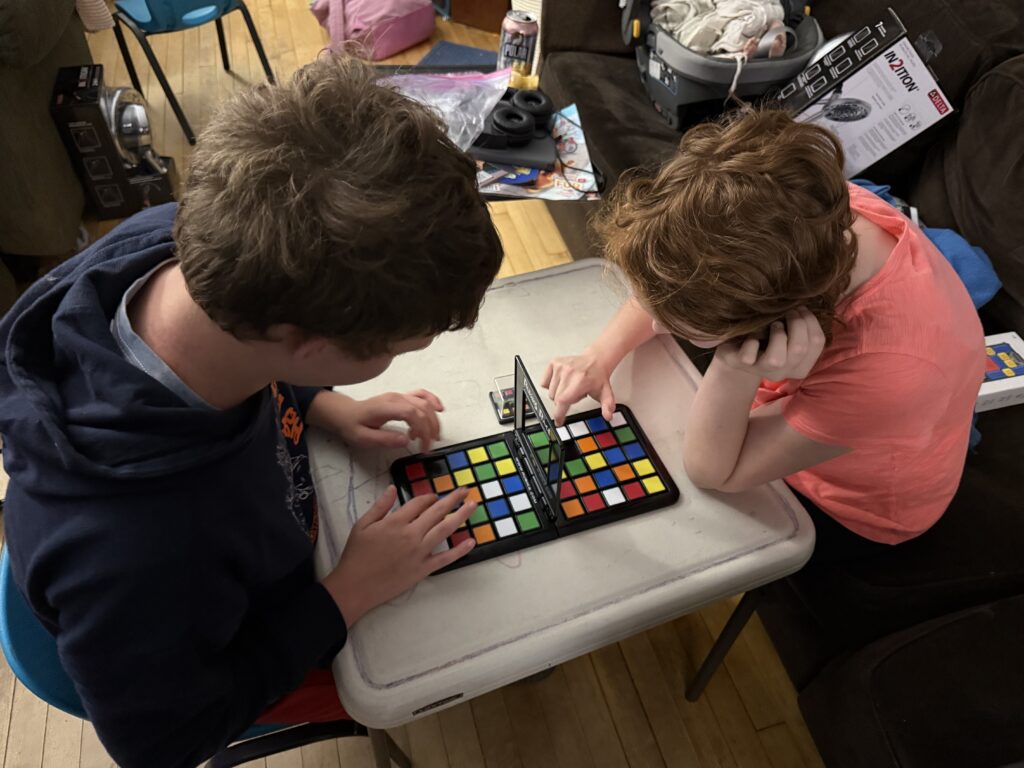
I hate Monopoly. There. I said it. Although, I should clarify that it is the original game that I loathe, not the unique ”Gamer” editions that have finite endings. It’s become a cultural joke that you can find out the true character of someone you love, or maybe someone you’ve just met, by playing Monopoly or Uno together. Why is that? Because games challenge us at a deep emotional level. When we are challenged our true character is magnified. Dr. Kathy Koch writes extensively about the character traits that we want to have ourselves and that we want to see in our children in the book Parenting Differently.
Patience is an easy place to start. It’s hard for little ones to wait their turn, in fact it’s a big developmental milestone to even be able to conceptualize sharing and turn-taking, but when a game is rewarding to play it helps little bodies and minds develop patience. Games are made to have predictable patterns that give little minds a concrete anchor of what will happen if they just wait.
Everything about playing games together builds cooperation. From setting up and tearing down, to helping a struggling sibling see a better move, cooperation is built by working together. Of coarse there is an entire genre of games dedicated to cooperation. Cooperative games only work well if you actually work together. If there is a contrarian in your group (i.e. Mr. E) who doesn’t want to share resources or purposely goes against the needs of the group on their turn, the game will fall apart and that player will have some angry teammates to contend with. But there is almost nothing better than achieving the goal of a cooperative game together, cheering when that rescue card appears and no one died. Everyone gets to share in that joy together because it was achieved through cooperation.
Playing games together encourages positive group talk such as cheering each other on and encouraging one another. Cooperative games, again, are especially good for encouraging these skills as you are winning or losing as a team, but even if the game is not cooperative, playing games encourages us to recognize when others have made a good play or are increasing their skills. I love hearing my children say ”Wow! That was a great move!” Or ”I did not see that coming!” I make sure to model this for my kids by acknowledging when they have bested their dear mother.
All of us have unique personality strengths and weaknesses, or maybe hidden traumas, that will find their way out when we are under stress, and there is nothing quite as stressful for a child as getting down to your last two cards only to have your sibling slam a draw 4, or worse, a hit 4x, on top of the Uno stack.
It’s hyperbole, of coarse, but for this very reason, playing games is a great way to develop character traits such as perseverance, resilience, and flexibility.
Of coarse, games rarely go the way we want them too. Good games are filled with twists and turns and demand that you are flexible. Things taking a bad turn in a game is a perfect opportunity to build resilience. Maybe you had the perfect strategy in mind, but your sibling thwarted you with am amazing move. That is about as frustrating as it gets. So, you would then have a choice of how you handle that frustrating moment. Do you melt in a tantrum of ”How dare you??” and flip the board proclaiming you will never play again? Or do you acknowledge a good move by your opponent and vow to learn their ways and do better next time? One leads to discouragement and defeat, the other leads to growth, perseverance, and resilience.
One of my favorite social skills built when playing games together is the use of humor. Playing games together is not just about the game on the table, it’s about the conversations that happen around the table. Sometimes those conversations lead to laughing so hard Pepsi Zero squirts out of your nose, narrowly missing the game board. Mom and Dad making mistakes is always a great occasion for a hearty belly laugh. You build deep, lasting memories, inside jokes, and points of reference that bond you together as a family, and as a team.
Shared memories are my favorite things about playing games together. Someday we will be out of the stage of childhood where I am eating at pretend restaurants or being asked to watch a fashion show, but we will never be too old to play a good game together. We will always have those memories to look back on, and we will always have the new opportunity to make more.
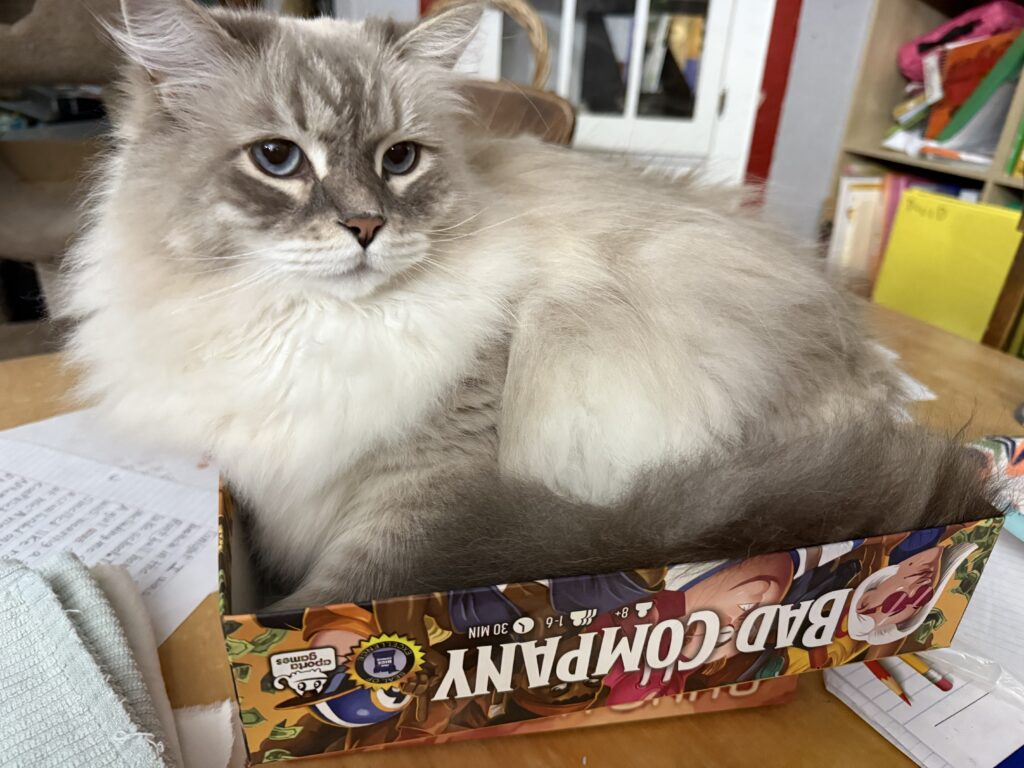
I’d like to think that we are shaping who our children are becoming while playing these games together, in fact I know that we are. They might not know that we are developing these character traits every time we whip out Hungry Monkey at the restaurant, but they will know that Mom and Dad were engaged with them and cared about spending time with them while we have a little fun together.
Play more games together. They make you better people.


